In computer science subject, students use the computer lab a lot. However, they also use the classroom for a considerable amount of time for their theory lessons. I do not work in schools, but part of my job is to work closely with teachers, from training to assessment and curriculum evaluation. Hence I present this classroom configuration advice to the teachers in our program.
Most of the schools we work with have their classroom setup as two desks joint. It helps teachers to either let each two students work together, or they can easily fall into their individual space and work alone. It is a better “controlling” mechanism as some might call it.
Current Setup
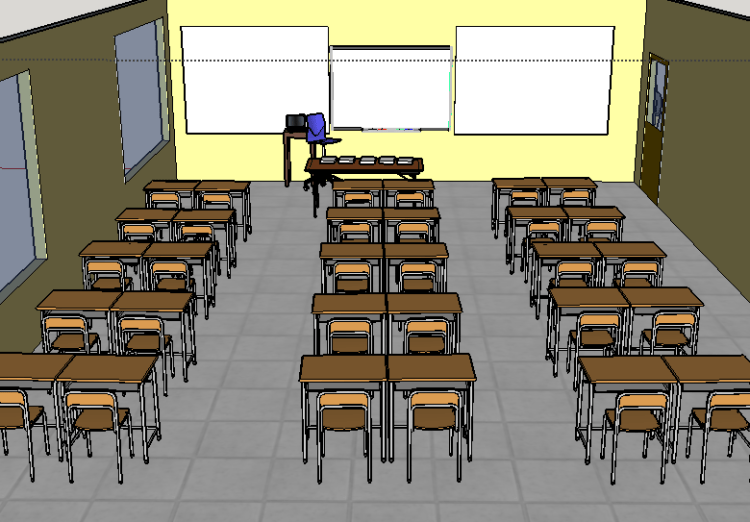
We know however in this century that collaborative learning has great benefits to the students self esteem as they participate in the learning process (Johnson & Johnson 1989). In addition, collaboration in learning improves students accomplishment (Slavin 1987).
We also that the physical environment plays a major role in affecting student interaction in the classroom. It also has to be organized to support the intended learning activities (Lippman, 2010).
The current setup has advantage that allow teacher to re-organise it without external help or maintenance. Hence I propose the following setup that does not require budget, only some schools would require their administration approval prior to implementation.
Proposed Setup
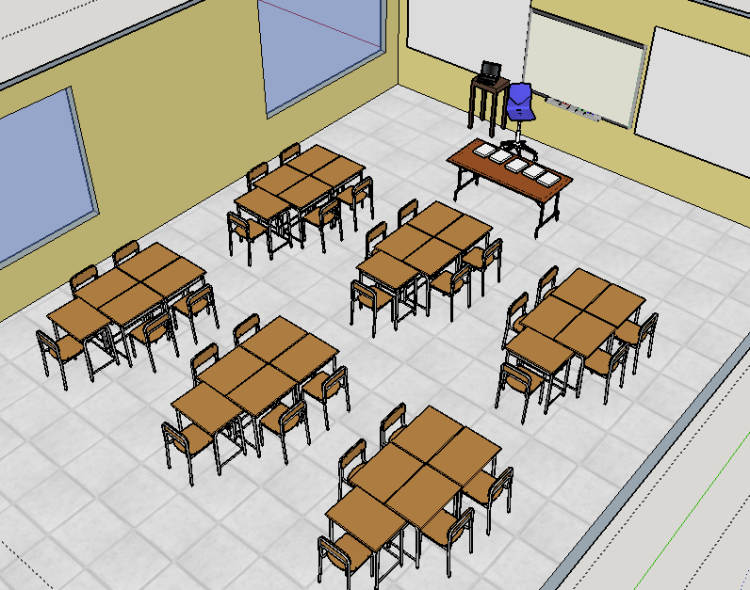
This setup while still allowing the students to face the teacher when she explains, allow a variety of interactions between the students. Class activities can now be group based more conveniently to the students. Which will also help them develop their interpersonal skills in the process. More importantly, students now have better chances to achieving better scores (if the pedagogy also support collaboration) as suggested by the research.
References
Johnson, R. T., and Johnson, D. W. “Cooperation and Competition Theory and Research.” Edina,MN: Interaction Book Co., 1989.
Slavin. R. E. “Cooperative Learning: Student Teams” 2nd Ed. Washington, DC: National Education Association, 1987.
Lippman, P. C. (2010). Can the physical environment have an impact on the learning environment?.
 Hanan Alshikh